
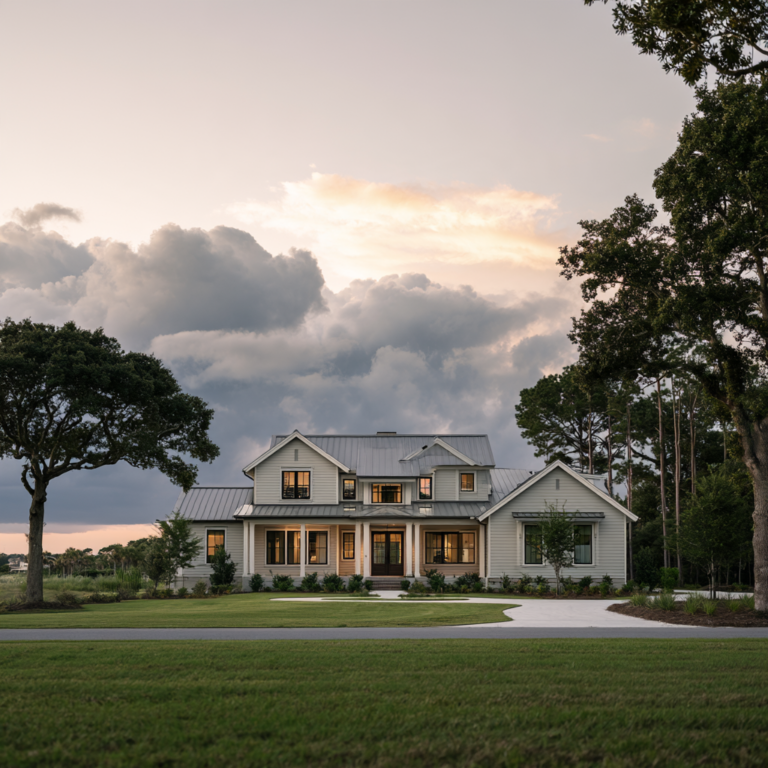
NOAA’s outlook for the 2026 Atlantic hurricane season calls for about 17 to 25 named storms and 8 to 13 that could reach hurricane strength, with forecasters putting 65% confidence on an above-normal season. The statistical peak runs from mid-August through mid-October meaning Horry County homeowners are heading into the most active stretch of the year. At the same time, South Carolina homeowners insurance premiums rose nearly 10% in 2025, almost double the national average, driven by storm damage, rebuilding costs, and reinsurance pressure.
The Materials Worth Knowing About Before Storm Season Peaks
Impact-rated windows. Beyond protecting a home during high winds, impact windows also improve insulation year-round, which means lower cooling costs in the months between storms. Many insurers offer premium discounts for wind-mitigation features like these, which can help offset rising coastal rates.
Metal and cool roofing. A metal roof rated for high wind uplift is more likely to survive a direct hit intact, and reflective “cool roof” coatings reduce attic heat and gain a meaningful advantage during Horry County’s long, humid summers. Roofing age and wind rating are also two of the first things insurers ask about when underwriting a coastal policy.
Fiber-cement siding. More resistant to wind-driven debris and moisture than vinyl, fiber-cement siding holds up better through repeated storm seasons and doesn’t trap moisture against the framing the way some other materials can, an important detail in a climate this humid.
Moisture-resistant, low-VOC materials. Coastal humidity makes mold and moisture intrusion a genuine risk after any storm event, not just a catastrophic one. Materials chosen to resist moisture and avoid off-gassing hold up better long-term and matter more to health-conscious buyers than they might have five years ago.
Ask for the paperwork. Many of these upgrades qualify for wind-mitigation insurance discounts, but only if they’re documented. A wind-mitigation inspection report, roofing permits, and window impact ratings are worth keeping on hand for your own policy, and to hand off to a buyer down the road.
The coverage gap buyers should understand. Standard homeowners insurance excludes flood damage entirely, and storm surge the wall of water a hurricane pushes ashore is classified as a flood event, not a wind event. A home with excellent wind-mitigation features can still be underinsured if separate flood coverage isn’t in place, which is worth flagging to any buyer purchasing near the coast.
With an active season forecast and insurance costs climbing, homes that combine storm resilience with energy efficiency aren’t just more comfortable to live in, they’re becoming easier to insure and easier to sell. Reach out and let’s connect so we can talk through what a specific home’s storm-readiness actually looks like.
Sources: NOAA 2026 Atlantic Hurricane Season Outlook; South Carolina homeowners insurance rate trend reporting (2025); general wind-mitigation and flood-coverage guidance — confirm current insurer-specific discounts before publishing.